Enhanced Storm Resilience
Aerated canopies experience significantly lower wind resistance, drastically reducing the risk of storm limb loss.
Canopy thinning, crown lifting, and structural maintenance executed strictly to AS4373 standards.
Pruning services across Fannie Bay, Parap, Stuart Park, and The Gardens.
In tropical Darwin, rapid growth rates require regular, professional tree pruning. Our Fannie Bay tree pruning service focuses on long-term structure, light penetration, and wind tolerance.
Fannie Bay's year-round warmth and wet season rains trigger vigorous growth. Species like Rain Trees, Northern Milkwood, and Sea Almonds require balanced canopy thinning to manage weight while retaining shade.
Aerated canopies experience significantly lower wind resistance, drastically reducing the risk of storm limb loss.
Allow light to reach understory gardens, lawns, and solar panel arrays while deterring mold and dampness.
Fulfill your duty under City of Darwin By-law 103 by keeping public footpaths and roads clear of low limbs.
We identify structural defects, dead branches, crossing limbs, and overall canopy density.
We establish an AS4373 pruning plan specifying target branches and acceptable removal percentages.
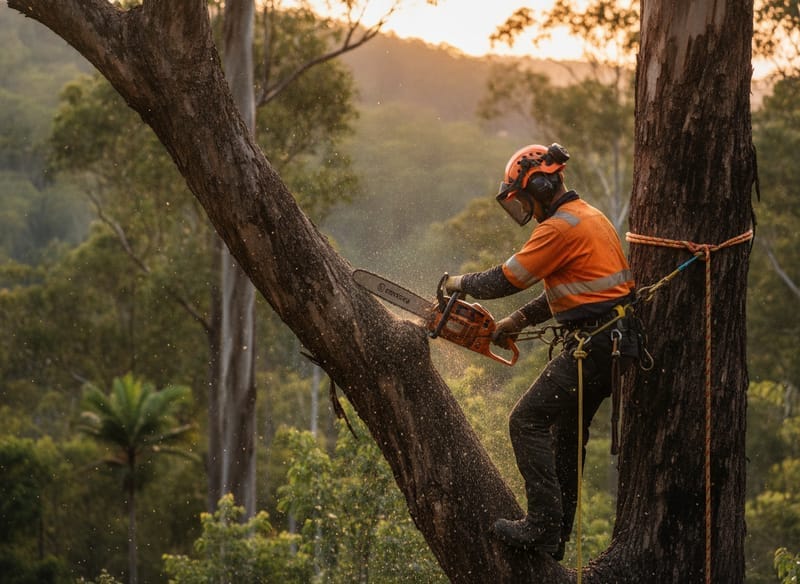
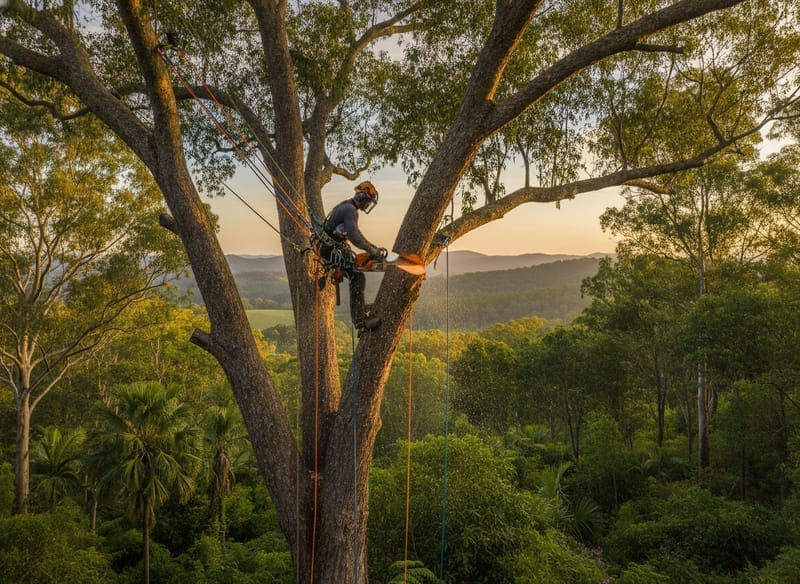
Our climbers ascend safely and make clean collar cuts using sharp, sterilised pruning saws.
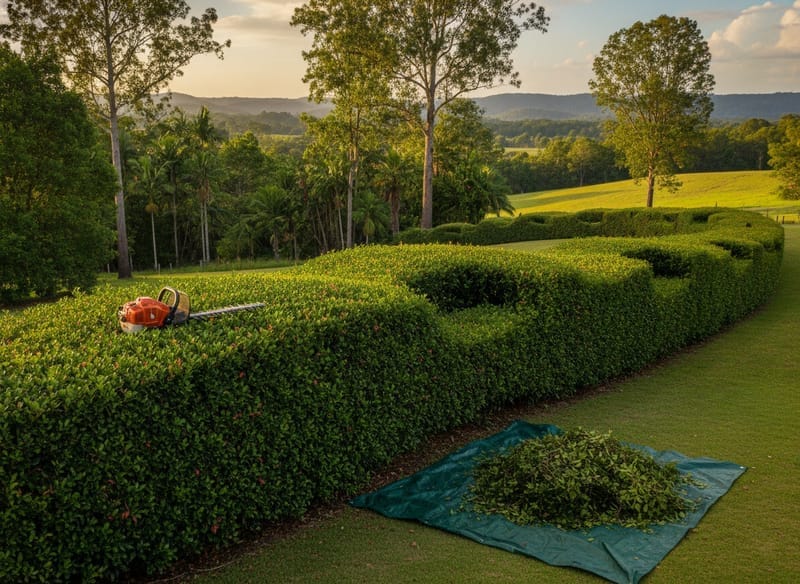
All cut material is fed into the chipper and raked from garden beds and lawns.
As the premier arborists at Darwin Arborist, we know exactly what it takes to maintain healthy, resilient canopies across the Top End. Whether you are managing an established residential block or a commercial property, professional Tree Pruning Fannie Bay is the single best investment you can make in the longevity and safety of your trees. Our tropical monsoon climate, marked by intense wet seasons and cyclonic winds, drives explosive growth that can quickly turn a beautiful Banyan or Darwin Woollybutt into a hazard if left unchecked.
We understand that genuine pruning is about preservation, not just making a tree smaller. Our team uses precision techniques to improve structural integrity, clear rooflines, and allow vital airflow through the canopy. By proactively managing weight distribution and wind resistance, we help property owners protect their homes ahead of storm season while keeping their valuable shade trees thriving year-round.
A major issue we see across Darwin is the damage caused by unqualified tree lopping and poorly executed DIY jobs. When untrained operators "top" or "head back" a tree to rapidly reduce its size, they leave large, jagged wounds that are highly susceptible to decay in our humid climate. Worse, this practice triggers a flush of weak, poorly attached epicormic regrowth that becomes a significant snapping hazard during high winds.
We saw the devastating results of poor tree structures when Severe Tropical Cyclone Fina crossed the coast as a Category 3 in November 2025. Trees with heavy, unmanaged crowns—or those destabilised by aggressive lopping—suffered catastrophic failures. This was often compounded by our local lateritic hardpans restricting root depth, leading to root plate failure under heavy wind loads.
The solution is professional pruning that strictly adheres to Australian Standard AS4373. At Darwin Arborist, our climbers make precise cuts at the branch collar, which allows the tree to heal naturally. Rather than indiscriminate hacking, we selectively thin the canopy to reduce wind load while preserving the tree's natural form and structural integrity. This methodical approach ensures your trees remain safe, balanced, and visually appealing.
We employ a range of targeted pruning techniques compliant with AS4373 to address the specific needs of your trees and property.
We selectively remove small, live branches throughout the canopy to improve light penetration and air movement. This critically reduces wind resistance during monsoonal squalls without altering the tree's natural shape. We strictly remove no more than 25–30% of live foliage in a single prune.
Our climbers safely access the canopy to remove dead, dying, diseased, or damaged branches. This is essential maintenance for trees overhanging living areas, driveways, or footpaths to prevent sudden branch drop during the dry season.
We carefully remove lower branches to increase the vertical clearance under the tree. This technique is ideal for clearing space for pedestrians, vehicles, or improving sightlines without compromising the upper canopy structure.
We target specific problem areas, such as branches encroaching on rooflines, power drops, or neighbouring boundaries. Every cut is made precisely at the branch collar to prevent decay and encourage rapid compartmentalisation.
Used on young trees to establish a strong structural framework early in life. We promote a single dominant leader and space out scaffold branches to ensure the tree grows securely, reducing the need for heavy corrective pruning later.
Our approach to tree care is structured, transparent, and entirely focused on delivering the best outcome for your landscape. It begins with a comprehensive on-site assessment. One of our qualified arborists will visit your property to evaluate the health, structure, and species of the tree in question, alongside any site-specific constraints like narrow access or overhead service lines.
Following the inspection, we provide a detailed, itemised quote that specifies exactly which AS4373 pruning techniques will be applied—whether that is targeted deadwooding, a complete crown thin, or line clearance pruning. We explain our methodology so you know precisely what to expect before we begin.
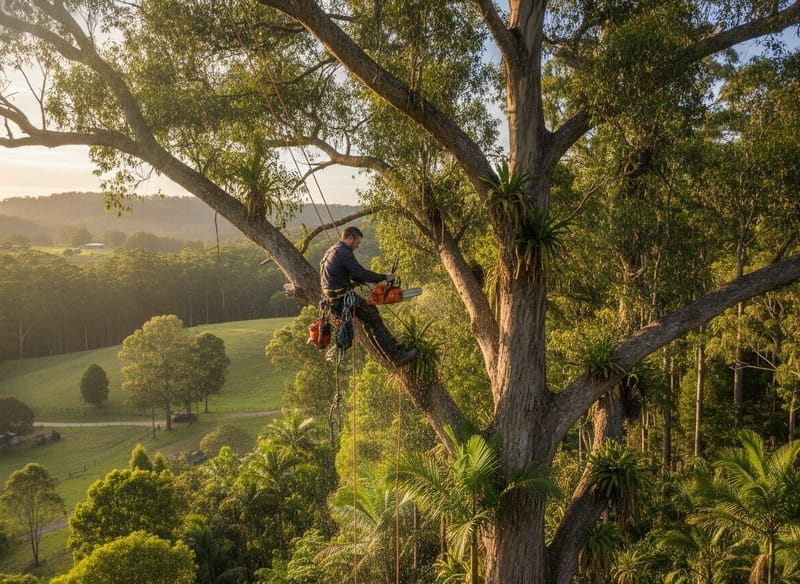
On the day of the job, our team arrives fully equipped with top-handle climbing saws, pole pruners, and heavy-duty wood chippers. Our climbers access the canopy safely using advanced rope-access techniques or an EWP, making clean, surgical cuts at the branch collars. We lower heavy limbs methodically using rigging lines to protect your gardens and lawns below.
Finally, we process all the removed branches through our wood chippers on-site. We rake and sweep the work area completely clean, leaving your property immaculate and your trees looking perfectly balanced and structurally sound.
Every pruning job undertaken by our team is executed strictly in accordance with AS4373 (Pruning of Amenity Trees). This standard is the definitive guide to safe, tree-positive arboriculture in Australia. Our on-site operations are led by AQF Level 3 qualified arborists who possess the technical knowledge to assess branch unions and structural loads accurately.
Safety is at the core of our operations. Our business is fully insured for public liability and carries comprehensive WorkCover for all our staff. Whether we are accessing a mature Sea Almond via double-rope climbing techniques or utilising an Elevating Work Platform (EWP) for roadside canopy management, our climbers hold all necessary tickets, ensuring your property is in completely safe hands.
For any property owner looking into Tree Pruning Fannie Bay, understanding Darwin's unique environmental pressures is crucial. Our local lateritic red soil features a hardpan layer that heavily restricts rooting depth. This creates shallow root plates, meaning dense, top-heavy trees are highly susceptible to windthrow. We saw this extensively during Cyclone Fina, particularly with fast-growing, less resilient species like African Mahogany. By contrast, native and resilient species like Northern Milkwood, Banyan, and Sea Almond fare exceptionally well when their canopies are professionally thinned to allow wind to pass through harmlessly. Regarding local regulations, the City of Darwin does not maintain a private protected tree register for standard residential blocks, meaning no permit is required for routine pruning within your boundary. However, under Council By-law 103, property owners are actively obliged to trim vegetation that obstructs footpaths or roadways. We frequently handle this compliance pruning to keep our clients on the right side of council regulations.
Once our team has completed the pruning, your tree will naturally begin the process of compartmentalising the cuts. You do not need to apply any paints or sealants to the wounds, as this actually hinders the tree's natural defence mechanisms.
In the weeks following, maintain deep, infrequent watering to support the tree's recovery, but be extremely careful not to overwater. As Darwin's recent cyclone history has shown, constantly waterlogged soil leads to balled root systems that compromise stability. Depending on the species and its growth rate, we recommend scheduling a follow-up inspection or maintenance prune every one to three years to manage new growth and prepare your canopies for the next wet season.
Pruning rates in Fannie Bay depend on tree height, accessibility, canopy density, and the volume of green waste.
We provide upfront, itemised pricing after inspecting your trees in person.
We prune residential and commercial trees across Fannie Bay and nearby suburbs.
Improve tree health and reduce cyclone risks with AS4373-compliant arborist pruning.
Request a Pruning Quote