Controlled Tree Size
Keep mature trees at a manageable height without triggering unstable, hazardous sprout regrowth.
Professional height reduction, canopy management, and safe alternatives to destructive lopping.
Managing overgrown tree canopies throughout Fannie Bay, Parap, and Ludmilla.
When property owners search for tree lopping Fannie Bay, they usually need to solve a specific problem: a tree that is too tall, touching the roof, blocking solar panels, or threatening fences. We deliver legitimate arborist solutions that achieve those goals safely.
Fast-growing trees in Fannie Bay such as poinciana, neem, and mango can quickly overpower small residential blocks. Crude lopping invites wood decay and termites into trunks in our humid monsoon climate, making proper reduction cuts essential.
Keep mature trees at a manageable height without triggering unstable, hazardous sprout regrowth.
Clear branches away from guttering, tin roofs, and solar arrays to prevent physical impact and shade loss.
Properly cut branches heal cleanly, closing wounds against fungal pathogens and tropical white ants.
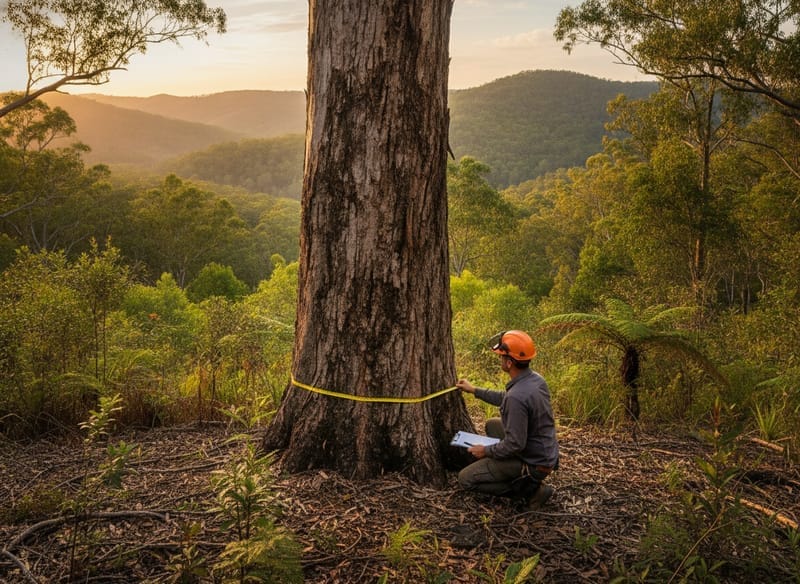
We assess the overgrown tree and determine the safest way to reduce its bulk without causing decay.
We explain the difference between crude topping and professional reduction pruning for your property.
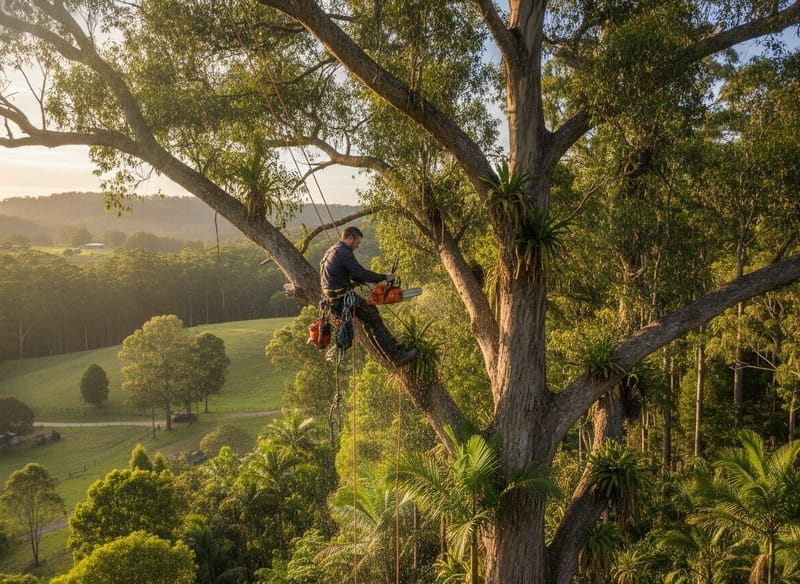
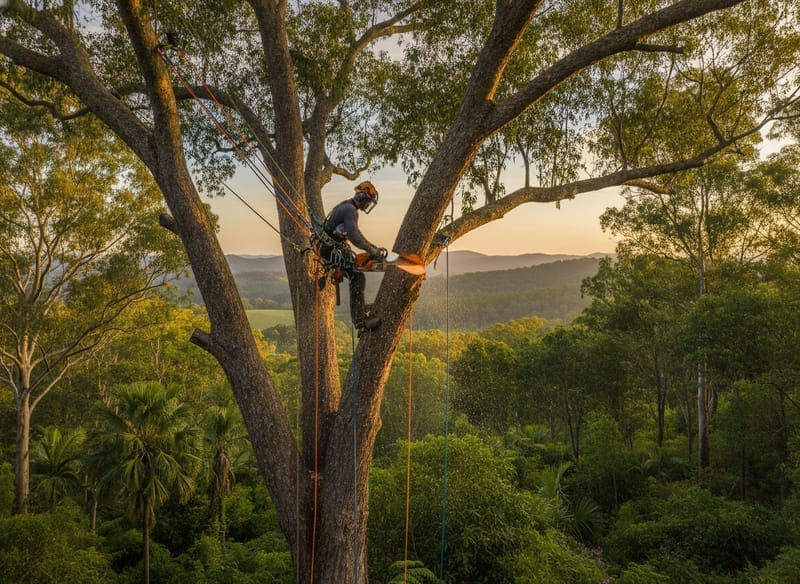
Our climbers lower heavy limb ends safely using rigging gear, respecting powerlines and garden beds.
All cut limbs are processed through our chipper, leaving your yard clear and neat.
When property owners book a service for Tree Lopping Fannie Bay, they are typically facing a fast-growing canopy that has simply become too large for their block. In our monsoonal climate, where overnight minimums rarely drop below 23 degrees and wet season downpours drive explosive growth, a once-manageable shade tree can quickly overwhelm roofs, pool enclosures, and boundary lines. We are Darwin Arborist, a team of local, qualified professionals dedicated to managing these exact challenges across the Top End. Whether you are managing a sprawling Banyan on an older acreage block or dealing with an oversized African Mahogany casting heavy shade over your solar panels, the goal is to reduce the hazard and regain your space without destroying the tree. True tree lopping—indiscriminately hacking branches back to bare wood—ruins tree structure and drastically shortens its lifespan. Instead, our climbers use targeted, standards-compliant techniques to bring your tree down to a safe, manageable size. We ensure your canopy remains a robust asset for your property, rather than a severe storm risk when the next cyclone approaches.
Many property managers and homeowners believe that aggressive tree lopping is the safest way to prepare for the wet season. In reality, blunt topping cuts create severe long-term hazards. When a tree's canopy is indiscriminately chopped back, it triggers a panic response, pushing out rapid, weakly attached epicormic shoots. These shoots look lush, but they lack the structural integrity of natural branches and are prone to snapping without warning. In Fannie Bay, we have seen firsthand how these compromised canopies perform under pressure. During severe weather events like Category 3 Cyclone Fina in late 2025, or the earlier Cyclone Marcus, the trees that failed catastrophically were often those with poorly managed, historically lopped canopies. Our local lateritic red soils feature a dense hardpan that restricts rooting depth, causing shallow, flat root systems. When a tree is incorrectly lopped, the resulting dense, bushy regrowth acts as a massive sail. Once cyclonic wind gusts hit, that sail effect, combined with saturated monsoonal ground, causes the entire root plate to fail. Our team solves this by replacing outdated lopping practices with AS4373-compliant canopy reductions. We assess the structural integrity of every branch, ensuring we retain the tree’s natural wind-dampening properties while heavily reducing the load and spread. By using precise branch collar cuts, we allow the tree to heal correctly, preventing the internal decay that inevitably hollows out heavily lopped trunks.
When customers ask us to make their trees smaller, our goal is to achieve the clearance and size reduction required while maintaining a structurally sound, healthy specimen. Here is how our team executes proper arboricultural size reduction under strict Australian Standards.
When a tree has grown too tall or wide for its environment, we utilise drop-crotch pruning techniques to reduce its overall dimensions. This is the correct, standard-compliant alternative to topping. We carefully select appropriate lateral branches to take over as the new terminal growth points, reducing the height and spread while maintaining a natural, structurally sound shape. This method is critical for managing fast-growing species during the wet season.
This technique involves the removal of the lowest branches of the canopy to increase the vertical clearance between the ground and the foliage. It is highly effective for clearing line-of-sight for driveways, allowing pedestrian access on footpaths, or preventing lower branches from resting on roofs and sheds. We ensure that no more than the standard-approved percentage of the live crown is removed to prevent stress.
Rather than reducing the entire canopy, selective pruning targets specific problematic limbs. If an African Mahogany or Sea Almond has a single heavy limb overextending toward your bedroom or pool area, we can systematically dismantle that specific section. We use precise branch collar cuts to ensure the tree compartmentalises the wound effectively, stopping rot and disease from entering the main trunk.
To reduce the 'sail effect' before cyclone season, we selectively remove secondary branches throughout the inner canopy. This allows high-velocity winds to pass straight through the tree rather than catching against a solid wall of foliage. During this process, our climbers also strip out any major deadwood, eliminating the risk of dead branches becoming airborne projectiles during severe storms.
Every project requiring Tree Lopping Fannie Bay begins with a thorough on-site consultation. Our qualified arborist will visit your property to assess the specific tree, its root zone, and its position relative to your home and powerlines. We discuss exactly what you want to achieve—whether that is clearing the roofline, allowing more winter sun into the yard, or mitigating risk ahead of the wet season. We then explain the best arboricultural approach to meet those goals without compromising the tree's health or stability.
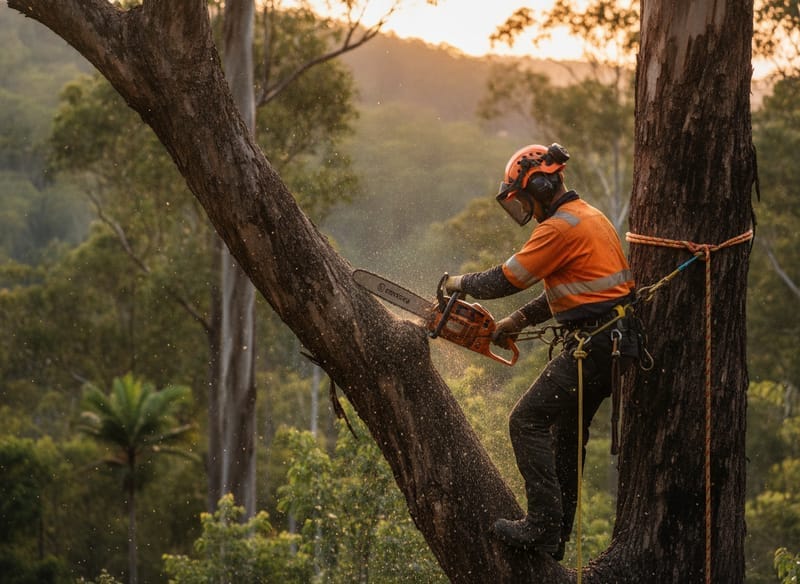
Once the plan is agreed upon, our AQF Level 3 climbing arborists arrive with the right equipment for the terrain. For tight residential blocks in Fannie Bay where our Elevating Work Platforms (EWPs) cannot reach, our team utilises advanced double-rope access techniques to safely navigate the canopy. We dismantle the heavy, overextended limbs piece by piece, using top-handle chainsaws and heavy-duty lowering ropes to protect your understory, fencing, and landscaping below.
The final step is our comprehensive cleanup. Cyclone Fina proved how dangerous loose green waste can be, so leaving debris behind is simply not an option. We process all removed limbs through our high-capacity wood chippers, turning bulky branches into usable mulch. We rake and clear the site entirely, ensuring your property is left immaculate. Our fleet of tipper trucks hauls away all debris, meaning you do not have to worry about verge piles or chasing up council pickups once the job is complete.
When engaging a team for major canopy work, professional credentials are non-negotiable. Our team operates strictly under AS4373 - Pruning of Amenity Trees, the authoritative Australian Standard that dictates proper cutting techniques, maximum foliage removal limits, and safe work practices. We refuse to undertake destructive topping because it violates these standards and leaves you with a dangerous liability.
Our business is fully public liability insured, providing complete peace of mind for residential and commercial clients across Darwin. Furthermore, every climber and ground crew member is covered by WorkCover. We hold all necessary high-risk tickets, including Working at Heights, EWP operation, and advanced chainsaw use. When our trucks arrive at your property, you are dealing with genuine experts who prioritise safety, legal compliance, and exceptional arboricultural standards.
Navigating local regulations for tree work in Darwin is far simpler than in southern states, but it absolutely requires local knowledge. On standard residential blocks in Fannie Bay, the City of Darwin does not require private landowners to obtain a permit to prune or remove trees. There is no private protected tree register for typical suburban properties, meaning our team can move forward with reducing or removing your problematic Northern Milkwood, Sea Almond, or African Mahogany without waiting for council green lights.
However, the City of Darwin By-Laws do place strict obligations on homeowners regarding public safety. Under By-law 103, property owners are required to trim vegetation that overhangs a footpath, verge, or roadway so it does not obstruct or endanger pedestrians and vehicles. If you have a large Banyan or Darwin Woollybutt pushing heavily into public space, council can compel you to clear it. Our team regularly conducts compliance pruning in Fannie Bay to ensure your boundary vegetation meets these exact requirements, protecting you from council notices while keeping the community safe.
After we have successfully reduced the size of your tree, the immediate aftercare is minimal. However, because Darwin’s climate drives year-round growth, monitoring the tree is essential. During the dry season months of June through August, consider providing deep, infrequent watering to help the tree recover from the pruning stress, especially since our gravelly lateritic soils hold moisture very poorly. Keep an eye out for any rapid, vertical epicormic shoots over the following wet season. While our AS4373-compliant cuts minimise this panic reaction, highly vigorous local species may still push some new growth. We highly recommend scheduling a routine canopy inspection with our arborists every one to two years, ideally just before the cyclone season begins, to ensure your trees remain safe, balanced, and perfectly proportioned for your property.
Pricing for height reduction and canopy lopping in Fannie Bay varies by tree scale, location, and waste volume.
We provide clear, fixed-price quotes after viewing the tree on-site.
We manage overgrown canopies for clients across Fannie Bay and nearby suburbs.
Choose safe, professional canopy reduction that keeps your property secure without harming tree health.
Get a Free Assessment