Legally Defensible Clarity
Protect yourself from liability disputes with formal documentation from a certified AQF Level 5 arborist.
Authoritative tree risk assessments, health diagnostics, and development reports by AQF Level 5 arborists.
Providing consulting arborist reports in Fannie Bay, Parap, Stuart Park, and Darwin City.
Whether you are planning a residential renovation in Fannie Bay, managing strata trees, or resolving a boundary concern, an AQF Level 5 arborist report gives you factual, legally robust clarity.
In Fannie Bay, large trees are often subject to root restriction from laterite hardpans and high wind exposure. An arborist report provides an evidence-based assessment of whether a tree is structurally viable or poses an unacceptable risk.
Protect yourself from liability disputes with formal documentation from a certified AQF Level 5 arborist.
Meet all building design conditions with compliant Tree Protection Plans under AS4970-2009.
Know the exact health, structural stability, and life expectancy of valuable canopy trees on your land.
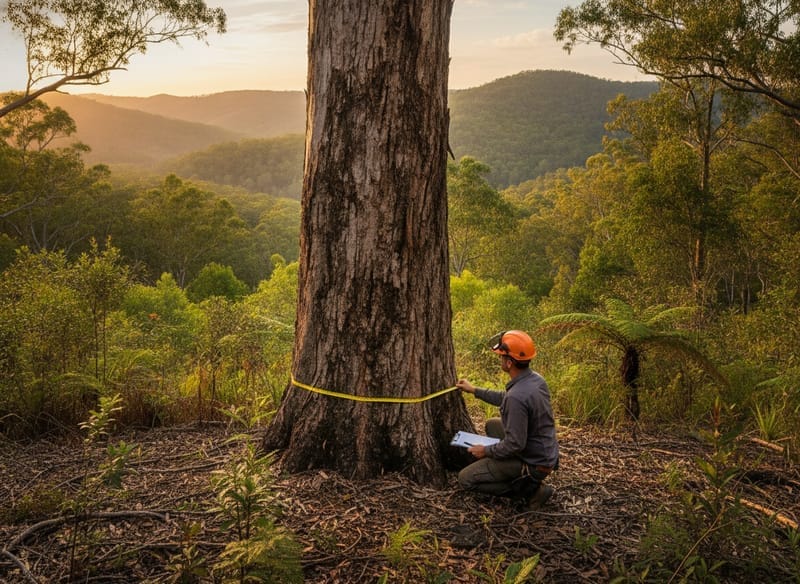
We measure trunk diameter (DBH), canopy spread, identify species, and inspect for fungal fruiting bodies.
We assess sounding, root plate integrity, canopy vigor, and structural defects using non-invasive tools.
We calculate Tree Protection Zones and quantify risk ratings against industry matrices.
You receive a thorough written report complete with high-resolution photos, findings, and clear recommendations.
Fannie Bay is one of Darwin's most established coastal suburbs, defined by large residential blocks, heritage elements, and massive mature canopy trees. Whether you are subdividing a block, managing post-cyclone tree hazards, or dealing with a complex neighbour dispute, obtaining an accurate Arborist Report Fannie Bay is the critical first step. Our local, AQF Level 5 consulting arborists provide comprehensive tree assessments tailored specifically to the Top End's unique monsoonal climate and property requirements.
Following the devastating impacts of Cyclone Fina and historical events like Cyclone Marcus, many mature trees—such as African Mahogany and Banyan—were left with compromised root plates or hidden structural damage. We deliver the definitive, science-based documentation property owners, developers, and strata managers need. From Tree Risk Assessments to Development Application (DA) support, our team ensures your property is safe, compliant, and fully prepared for the upcoming wet season.
Property management and development in the Top End require precision. Relying on an unqualified tree lopper or attempting a DIY health assessment can lead to disastrous outcomes, particularly when building around mature trees or assessing storm damage. An inaccurate report might fail to identify the early signs of root plate failure in a massive canopy tree, or it could prescribe the wrong Tree Protection Zone (TPZ) for a native Sea Almond on a development site.
Without a certified AQF Level 5 consulting arborist, your DA could be rejected, your insurance claim delayed, or worse, a dangerous tree could be left standing near your home during the next heavy storm.
We solve this by providing highly detailed, legally sound documentation. Our reports are grounded in industry best practices, adhering strictly to AS4970 for tree protection on development sites and AS4373 for pruning standards. We give Fannie Bay homeowners, builders, and property managers clear, actionable data. Whether you need a Safe Useful Life Expectancy (SULE) rating for an aging tree or a formal risk assessment following a severe monsoon event, our documentation is thorough, factual, and highly respected by insurers and authorities alike.
Our consulting team delivers a range of specialised reporting services, built on precise arboricultural methodologies and Australian Standards to give you the data you need.
We conduct a comprehensive Visual Tree Assessment (VTA) to identify structural defects, fungal decay, and root heave. This documents target zones, evaluates the likelihood of failure (crucial after events like Cyclone Fina), and provides clear, actionable hazard mitigation strategies.
Essential for subdivision or building works in vegetated areas. We inventory existing trees, record species, DBH (Diameter at Breast Height), and calculate Structural Root Zones (SRZ) to ensure your development plans integrate safely with retained trees.
We map out highly specific Tree Protection Zones (TPZ) to shield root systems during construction. This includes specifications for protective fencing, mulch buffers, and supervised work zones to prevent soil compaction from heavy machinery on Darwin's tricky lateritic soils.
A detailed evaluation of a tree's current health, structural integrity, and environmental context to estimate how much longer it can be safely retained in the landscape, guiding long-term property planning and replanting schedules.
Formal expert documentation for insurance claims or legal disputes. We provide forensic analysis on why a tree failed, determining if it was due to waterlogged balled root systems, poor planting history, or extreme wet season weather events.
Securing a professional tree report with us is a streamlined, transparent process designed to give you clarity and total peace of mind.
Step 1: Initial Consultation We discuss your specific needs, whether it is a pre-purchase inspection for a Fannie Bay property, an insurance claim following wet season damage, or a new residential development requiring structural root mapping.
Step 2: On-Site Visual Tree Assessment (VTA) Our AQF Level 5 arborist arrives on-site to conduct a thorough inspection. We measure the Diameter at Breast Height (DBH), calculate canopy spread, and assess soil conditions. We look closely at Darwin's unique lateritic soil profiles, checking for the shallow root systems that make large trees highly vulnerable to windthrow.
Step 3: Data Analysis and Local Research We cross-reference our field data with local mapping tools, checking for relevant overlays, heritage declarations, or specific Northern Territory planning constraints that might impact your property's development.
Step 4: Report Drafting and Delivery We compile our findings into a comprehensive, easy-to-read PDF document. This includes high-resolution photography, SULE ratings, hazard matrices, and actionable recommendations.
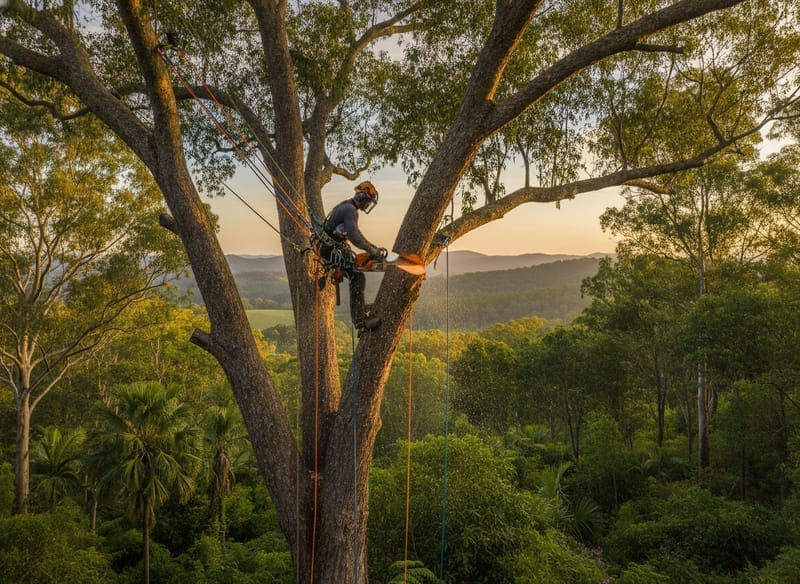
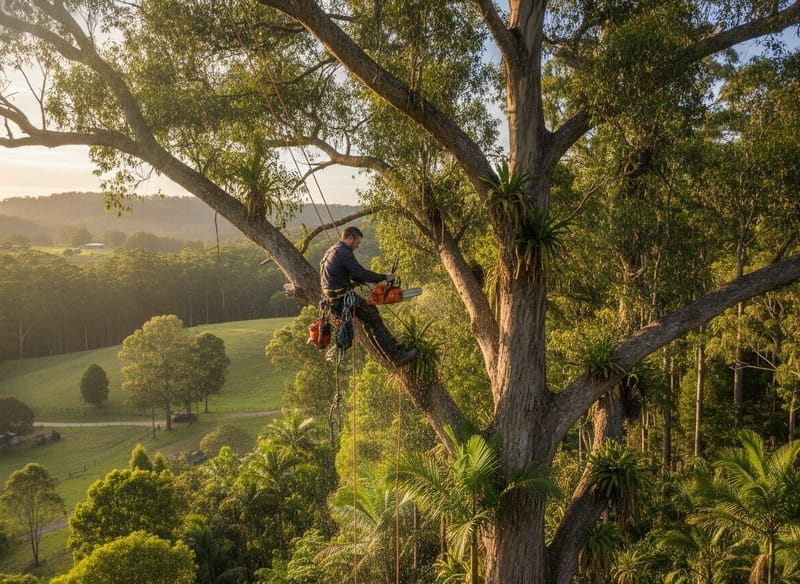
Step 5: Follow-Up Action If tree removal, deadwooding, or hazard reduction pruning is recommended, our highly skilled AQF Level 3 climbing team can execute the required physical works safely and efficiently.
Producing a valid Arborist Report Fannie Bay demands high-level qualifications. Our consulting arborists hold an AQF Level 5 Diploma of Arboriculture, which is the mandatory credential for drafting formal tree risk assessments and tree protection plans.
We operate in strict accordance with AS4970 (Protection of Trees on Development Sites) and AS4373 (Pruning of Amenity Trees). Our business is fully insured with comprehensive Public Liability and Professional Indemnity coverage, protecting our clients at every stage. When you engage our team, you receive authoritative documentation that stands up to tight scrutiny from insurers, courts, and urban planners across the Territory.
Navigating tree management requires distinct local knowledge. The City of Darwin does not require permits for routine private tree removals, and the NT Planning Scheme's clearing overlays generally bypass standard residential blocks. However, an Arborist Report Fannie Bay is frequently essential for development applications, heritage-listed properties, or managing significant hazard risks.
Darwin's challenging environmental factors heavily influence our assessments. Our lateritic red soil and its restrictive hardpan mean massive species like African Mahogany often develop dangerously shallow root plates. Following the severe impacts of Cyclone Marcus and the recent Category 3 Cyclone Fina, we have documented extensive structural damage caused by windthrow and waterlogged, compacted soils. We understand exactly how local species, from resilient Northern Milkwood to vulnerable imported shade trees, behave in extreme monsoonal conditions, ensuring your report accurately reflects Top End realities.
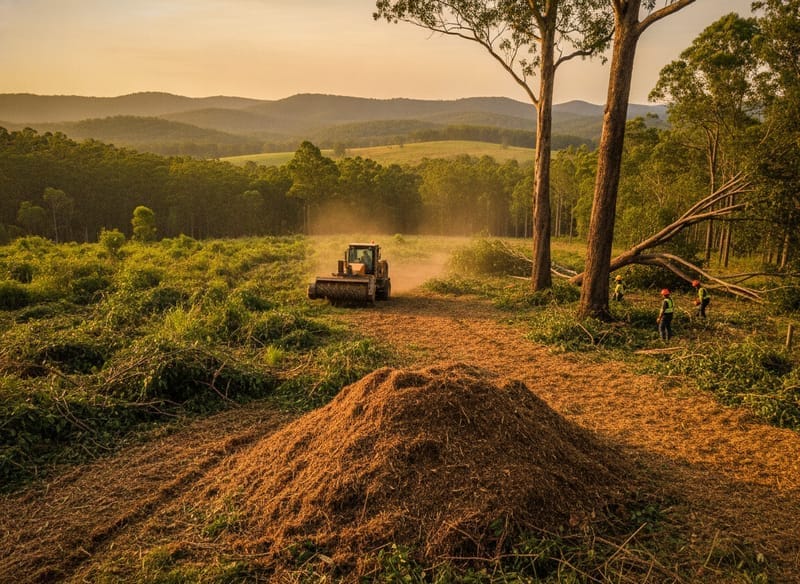
Once you receive your comprehensive arborist report, the next steps depend entirely on the findings. For development sites, you must implement the specified Tree Protection Zones (TPZ) and protective fencing before any earthworks or machinery access begins on the block. If your report highlights structural hazards, such as an over-extended limb or a decaying trunk, action is critical before the next wet season arrives. Our team can seamlessly transition from consultation to physical tree care. Call us back to arrange AS4373-compliant hazard reduction pruning, canopy weight reduction, or safe, complete tree removal using our heavy-duty chipping and crane equipment.
Arborist report fees in Fannie Bay reflect the scope of assessment, number of trees, and complexity of reporting.
We provide fixed-fee quotes for all consulting arborist reporting services.
We provide consulting arborist reports for residential, commercial, and institutional clients across Fannie Bay and Darwin.
Get professional, objective tree assessments and development reports from AQF Level 5 consultants.
Book a Consultation